

As a seasoned supplier of Hydraulic Disc Brakes for e-bikes, I've encountered numerous inquiries from customers about the maintenance requirements of these high - performance braking systems. One of the most common questions is whether hydraulic disc brakes on an e - bike demand special tools for maintenance. In this blog, I'll delve into this topic, sharing insights based on years of industry experience.
Understanding Hydraulic Disc Brakes for E - bikes
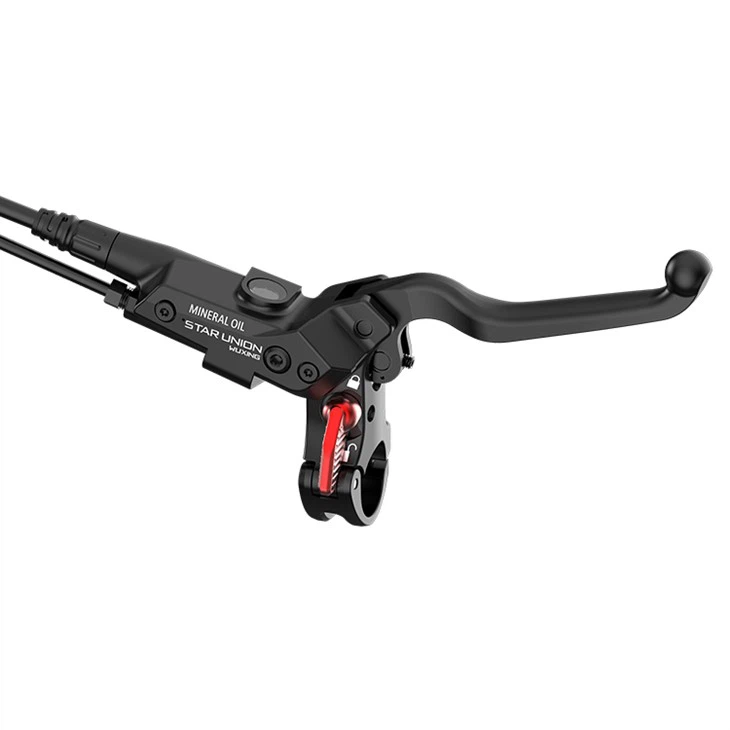
Before we discuss the maintenance tools, let's briefly understand what hydraulic disc brakes are. Hydraulic disc brakes on e - bikes use a fluid mechanism to transfer force from the brake lever to the brake caliper. When you squeeze the brake lever, the force is transmitted through hydraulic fluid in a closed system, causing the brake pads to clamp down on the disc rotor, thus slowing or stopping the e - bike.
The advantage of hydraulic disc brakes on an e - bike is their superior stopping power, consistent performance in various weather conditions, and lower maintenance requirements compared to mechanical brakes. However, when maintenance is needed, the question of tools comes into play.
General Maintenance Scenarios and Required Tools
Brake Pad Replacement
The brake pads are one of the most commonly replaced components in a hydraulic disc brake system. Over time, the friction material on the brake pads wears down, reducing braking efficiency. To replace the brake pads, you generally don't need special tools. A basic set of Allen wrenches is usually sufficient. These wrenches can be used to remove the bolts that hold the brake caliper in place, allowing you to access the brake pads. After replacing the pads, you can use the same Allen wrenches to reassemble the caliper.

Bleeding the Brake System
Bleeding the brake system is a more complex maintenance task. Air can enter the hydraulic system over time, either through normal use or if there has been a leak. When air is present in the system, it can cause a spongy feeling in the brake lever, reducing braking performance.
For bleeding the brake system, you do need some specialized tools. A brake bleeding kit is essential. This kit typically includes a syringe, tubing, and fittings. The syringe is used to draw out the old fluid and air from the system, while the tubing connects the different parts of the brake system during the bleeding process. Some high - end e - bike models, such as our 150PYDZ/2 Pro, require precise bleeding to maintain optimal performance.
Caliper Adjustment
If the brake caliper is not properly aligned with the disc rotor, it can cause uneven braking or rubbing noises. Caliper adjustment is a critical maintenance task. To adjust the caliper, you may need a set of metric feeler gauges. These gauges are used to measure the clearance between the brake pads and the disc rotor. By inserting the feeler gauges between the pad and the rotor, you can ensure that the caliper is centered and the pad spacing is correct.
Do Specialized Tools Justify the Cost?
The cost of specialized tools for hydraulic disc brake maintenance can be a concern for many e - bike owners. However, as a Hydraulic Disc Brakes Ebike supplier, I can attest to the fact that these tools are a worthy investment. Proper maintenance ensures the longevity and safety of your e - bike. A well - maintained brake system can prevent accidents and costly repairs in the long run.
Moreover, if you're an avid e - bike rider or plan to do multiple maintenance jobs over time, having a set of specialized tools can save you money on professional maintenance services. Many e - bike shops charge a significant fee for brake bleeding and caliper adjustment. By owning the necessary tools, you can perform these tasks yourself at a fraction of the cost.
Our Product Range and Maintenance Considerations
We offer a diverse range of hydraulic disc brakes for e - bikes, including the 221PYDZJ Pro and 221PYDZJS Pro. These models are designed with performance and ease of maintenance in mind.
The brake systems in our e - bikes are engineered to be durable, but like any mechanical component, they require regular maintenance. Our user manuals provide detailed instructions on how to perform basic maintenance tasks with common tools. For more complex tasks such as bleeding, we recommend using the appropriate specialized tools.
Conclusion and Call to Action
In conclusion, while some basic maintenance tasks on hydraulic disc brakes for e - bikes can be done with common household tools, more complex tasks like bleeding the system and precise caliper adjustment do require specialized tools. As a supplier, we understand the importance of providing high - quality products that are not only reliable but also easy to maintain.
If you're in the market for hydraulic disc brakes for your e - bike or want to discuss the best maintenance practices, we're here to help. Contact us for a detailed product consultation and to start a purchasing discussion. Our team of experts can provide you with all the information you need to make an informed decision.
References
- Bicycle Mechanics Handbook, various editions.
- Industry reports on e - bike hydraulic disc brake technology.