

As a supplier of electric motorcycle throttles, I've been deeply involved in understanding how these crucial components operate under various conditions. High - altitude areas present a unique set of challenges and characteristics that significantly impact the performance of electric motorcycle throttles. In this blog, I'll delve into the science behind how electric motorcycle throttles work in high - altitude regions.
1. Basic Working Principle of Electric Motorcycle Throttles
Before exploring high - altitude effects, it's essential to understand the fundamental working principle of electric motorcycle throttles. An electric motorcycle throttle is a device that controls the speed of the electric motor. When a rider twists the throttle grip, it sends a signal to the motor controller. This signal is typically in the form of a varying voltage or resistance, depending on the type of throttle.
There are mainly two types of electric motorcycle throttles: mechanical and electronic. Mechanical throttles use a cable system. When the rider twists the throttle, the cable pulls or releases, which in turn controls the opening of a valve in the motor controller. Electronic throttles, on the other hand, use sensors such as potentiometers or Hall - effect sensors. These sensors convert the angular position of the throttle grip into an electrical signal, which is then sent to the motor controller.
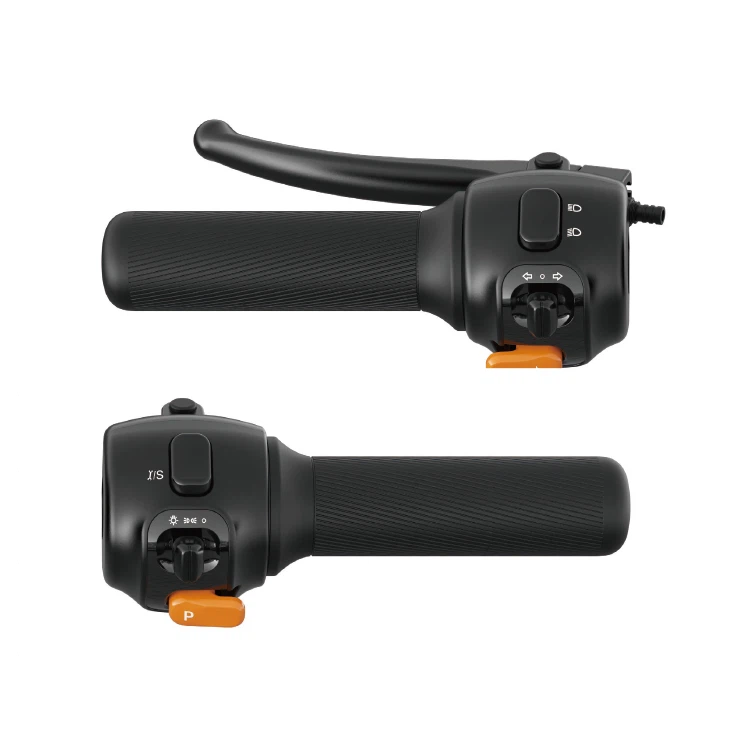
Our company offers a range of high - quality throttles, including the A33, A31, and A25. These throttles are designed with precision and reliability in mind, ensuring smooth and accurate speed control for electric motorcycles.
2. High - Altitude Environment Characteristics
High - altitude areas have several distinct environmental characteristics that affect the operation of electric motorcycle throttles. The most significant factors are lower air pressure, lower oxygen levels, and lower temperatures.
- Lower Air Pressure: As altitude increases, air pressure decreases. This reduction in air pressure can affect the performance of the electric motor and the throttle system. For example, some electric motors rely on air cooling. With lower air pressure, the cooling efficiency may be reduced, which can lead to overheating. Overheating can cause the throttle to malfunction or reduce the overall performance of the motorcycle.
- Lower Oxygen Levels: Although electric motorcycles do not burn fuel like traditional gasoline - powered motorcycles, oxygen levels can still have an indirect impact. Some electronic components in the throttle and motor controller may have a slight sensitivity to the ambient environment. In areas with extremely low oxygen levels, there could be a very minor effect on the electrical conductivity of certain materials, although this is usually negligible.
- Lower Temperatures: High - altitude areas often have lower temperatures. Cold temperatures can affect the performance of electronic components. For example, the viscosity of lubricants used in mechanical parts of the throttle may increase, making the throttle feel stiffer. In electronic throttles, the performance of sensors and circuit boards can be affected by the cold. Some electronic components may have a reduced lifespan or may not function optimally in very cold conditions.
3. Impact on Throttle Performance
The high - altitude environment can have both direct and indirect impacts on the performance of electric motorcycle throttles.
- Signal Transmission: In electronic throttles, the sensors and wiring are crucial for signal transmission. Lower temperatures can cause the electrical resistance of the wiring to increase. This increase in resistance can lead to a weaker signal being sent to the motor controller. As a result, the motor may not respond as accurately to the rider's throttle input. For example, when the rider twists the throttle to accelerate, the motorcycle may not accelerate as quickly as expected.
- Mechanical Components: In mechanical throttles, the cable system can be affected by the lower air pressure and colder temperatures. The cable may contract or expand due to temperature changes, which can cause the throttle to feel loose or tight. Additionally, the reduced air pressure can make it more difficult for the cable to move smoothly through its housing, leading to a less responsive throttle.
- Motor Controller Interaction: The motor controller is responsible for interpreting the throttle signal and adjusting the power output of the motor. In high - altitude areas, the motor controller may need to compensate for the changes in the throttle signal and the performance of the motor. For example, if the motor is overheating due to reduced cooling efficiency, the motor controller may limit the power output to prevent damage. This can make the throttle seem less powerful than in normal conditions.
4. Solutions and Adaptations
To ensure the proper operation of electric motorcycle throttles in high - altitude areas, several solutions and adaptations can be implemented.
- Temperature - Resistant Components: Using temperature - resistant materials in the construction of the throttle can help mitigate the effects of cold temperatures. For example, choosing electronic components with a wider operating temperature range can ensure that the throttle functions correctly even in extremely cold conditions. Our A33 throttle is designed with high - quality temperature - resistant materials to provide reliable performance in various environments.
- Improved Cooling Systems: For electric motors that rely on air cooling, improving the cooling system can help counteract the reduced cooling efficiency at high altitudes. This can include adding fins or fans to increase the surface area for heat dissipation. By keeping the motor at a proper temperature, the throttle can operate more smoothly.
- Calibration and Tuning: Regular calibration and tuning of the throttle and motor controller can help optimize the performance in high - altitude areas. This involves adjusting the throttle signal and the motor controller settings to ensure accurate and responsive operation. Our technical support team can provide guidance on how to calibrate and tune our throttles for high - altitude use.
5. Testing and Quality Assurance
As a responsible supplier, we conduct rigorous testing on our electric motorcycle throttles to ensure their performance in high - altitude areas.
- Altitude Simulation Testing: We use altitude simulation chambers to recreate the high - altitude environment in our testing facilities. By subjecting our throttles to different air pressures, temperatures, and oxygen levels, we can accurately assess their performance. This allows us to identify any potential issues and make necessary improvements before the products are released to the market.
- Field Testing: In addition to laboratory testing, we also conduct field testing in high - altitude areas. Our test riders take our motorcycles equipped with our throttles to real - world high - altitude locations to evaluate the performance under actual riding conditions. This real - world feedback helps us to fine - tune our products and ensure that they meet the needs of riders in high - altitude areas.
6. Conclusion and Call to Action
In conclusion, the operation of electric motorcycle throttles in high - altitude areas is affected by several environmental factors, including lower air pressure, lower oxygen levels, and lower temperatures. However, with the right design, materials, and testing, these challenges can be overcome.
Our company is committed to providing high - quality electric motorcycle throttles that are suitable for use in high - altitude areas. Our A33, A31, and A25 throttles are designed and tested to ensure reliable performance in various environments.
If you're in the market for electric motorcycle throttles, especially for use in high - altitude areas, we invite you to contact us for more information. Our team of experts is ready to assist you in choosing the right throttle for your needs and to provide any technical support you may require. Let's work together to ensure a smooth and enjoyable riding experience for your electric motorcycles.

References
- Smith, J. (2018). Electric Motorcycle Technology. New York: TechPub.
- Johnson, R. (2019). High - Altitude Effects on Electronic Devices. London: Science Press.
- Brown, A. (2020). Motorcycle Throttle Systems: Design and Operation. Sydney: MotoBooks.