

Hey there! As a supplier of Star Union hydraulic disc brakes, I often get asked about the braking energy conversion efficiency of our products. It's a crucial topic, especially for those who are looking to make the most out of their braking systems. So, let's dive right in and explore what this efficiency is all about.
First off, let's understand what braking energy conversion efficiency means. When a vehicle or a machine is in motion, it has kinetic energy. When the brakes are applied, this kinetic energy needs to be converted into another form of energy, usually heat, to slow down or stop the vehicle. The braking energy conversion efficiency is the ratio of the useful energy converted (like heat that helps in braking) to the total kinetic energy of the moving object at the start of the braking process.
Now, let's talk about our Star Union hydraulic disc brakes. These brakes are designed with some pretty advanced technology to ensure a high level of braking energy conversion efficiency. One of the key factors that contribute to this efficiency is the quality of the materials used. Our brakes are made with high - grade friction materials that have excellent heat - dissipation properties. When the brake pads come in contact with the brake disc, they can quickly convert the kinetic energy of the moving parts into heat energy. This heat is then dissipated into the surrounding environment, allowing the brakes to work effectively without overheating.
Another important aspect is the hydraulic system in our disc brakes. The hydraulic system is responsible for transmitting the force from the brake pedal to the brake pads. In our Star Union hydraulic disc brakes, the hydraulic system is designed to be highly responsive and efficient. It can quickly build up the pressure needed to apply the brakes, ensuring that the braking process starts as soon as the driver steps on the pedal. This immediate response helps in converting the kinetic energy more effectively, as there is less delay in the braking action.
Let's take a look at some of our popular models. The 221PYDZJ is a great example. This model has been engineered to provide a high level of braking energy conversion efficiency. It has a well - balanced design that distributes the braking force evenly across the brake disc. This even distribution of force means that all parts of the brake disc are working together to convert the kinetic energy, resulting in a more efficient braking process.
The 221PYDZJ Pro takes things a step further. It features an upgraded hydraulic system and improved friction materials. The upgraded hydraulic system can build up pressure even faster, and the improved friction materials have a higher coefficient of friction. This combination allows the 221PYDZJ Pro to convert the kinetic energy of the moving parts into heat energy more quickly and efficiently.
The 150PYDZ/2 is also a remarkable model. It is designed for applications where space is limited but high - performance braking is still required. Despite its compact size, the 150PYDZ/2 has a high braking energy conversion efficiency. Its unique design allows it to maximize the contact area between the brake pads and the brake disc, which in turn enhances the energy conversion process.
But how do we measure the braking energy conversion efficiency of our Star Union hydraulic disc brakes? Well, we use a combination of laboratory tests and real - world simulations. In the laboratory, we use specialized equipment to measure the input kinetic energy of a test rig and the output heat energy generated during the braking process. We also test the brakes under different conditions, such as different speeds and loads, to ensure that they perform well in all situations.
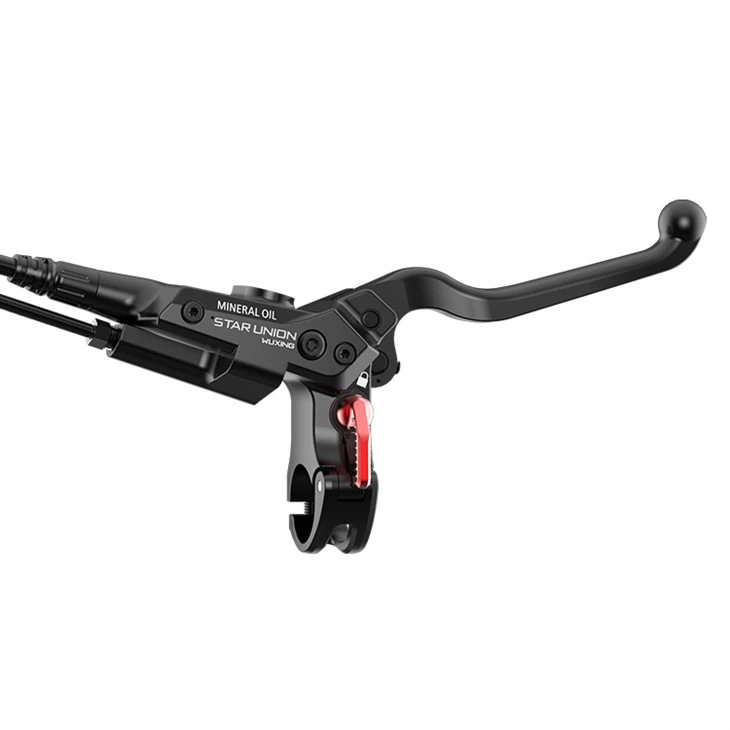

In real - world simulations, we install our brakes on vehicles or machines and monitor their performance. We collect data on factors like braking distance, temperature rise, and the time it takes for the vehicle to come to a stop. By analyzing this data, we can accurately determine the braking energy conversion efficiency of our brakes.
One of the benefits of having a high braking energy conversion efficiency is improved safety. When the brakes can convert the kinetic energy of the moving parts into heat energy quickly and efficiently, the vehicle can stop in a shorter distance. This is especially important in emergency situations, where every inch of braking distance can make a difference.
Another benefit is reduced wear and tear on the brakes. When the brakes are able to convert the energy efficiently, there is less stress on the brake components. This means that the brake pads and discs will last longer, reducing the need for frequent replacements.
So, if you're in the market for high - performance hydraulic disc brakes with excellent braking energy conversion efficiency, look no further than our Star Union hydraulic disc brakes. Whether you're a manufacturer looking to equip your vehicles or machines with top - notch brakes or an individual looking to upgrade your existing braking system, our products are a great choice.
If you're interested in learning more about our Star Union hydraulic disc brakes or want to discuss a potential purchase, don't hesitate to get in touch. We're always happy to answer your questions and help you find the right brake solution for your needs.
References
- Automotive Braking Systems: Principles and Design by John C. Dixon
- Handbook of Hydraulic Engineering by Ven Te Chow