

Do hydraulic disc brakes require a break - in period on an ebike?
As a supplier of Hydraulic Disc Brakes for ebikes, I've encountered numerous inquiries from customers regarding the necessity of a break - in period for these essential components. In this blog, I'll delve into the science behind hydraulic disc brakes and explain whether a break - in period is indeed required.
Understanding Hydraulic Disc Brakes
Hydraulic disc brakes are a popular choice for ebikes due to their superior stopping power, modulation, and reliability. They operate on the principle of Pascal's law, which states that pressure applied to a confined fluid is transmitted equally in all directions. In a hydraulic disc brake system, when the brake lever is squeezed, it forces hydraulic fluid through a brake line to a caliper. The caliper then squeezes the brake pads against the rotor, creating friction and slowing down the wheel.
The key components of a hydraulic disc brake system include the brake lever, master cylinder, brake line, caliper, brake pads, and rotor. Each of these components plays a crucial role in the overall performance of the braking system.
The Concept of Break - In Period
A break - in period is a phase during which a new component is gradually introduced to normal operating conditions to optimize its performance and longevity. For hydraulic disc brakes on an ebike, the break - in period is mainly about ensuring proper contact between the brake pads and the rotor.
During the manufacturing process, brake pads and rotors have a smooth surface finish. When they first come into contact, only a small portion of the pad surface actually touches the rotor. This can result in reduced braking efficiency and uneven wear. The break - in process helps to "bed in" the brake pads, which means that the pad material transfers a thin layer of itself onto the rotor surface. This transfer layer creates a more consistent contact surface between the pad and the rotor, improving braking performance and reducing noise.
Scientific Evidence for Break - In
Several scientific studies have shown that a proper break - in period can significantly enhance the performance of hydraulic disc brakes. A study published in the Journal of Automotive Engineering found that brakes that were properly broken in had a 15 - 20% improvement in stopping distance compared to brakes that were not broken in. This is because the even transfer layer created during the break - in process allows for more efficient friction generation.
Another aspect to consider is the wear pattern. Without a break - in period, the brake pads may wear unevenly, leading to premature failure and reduced braking performance over time. A well - broken - in brake system ensures that the wear is distributed evenly across the pad and rotor surfaces, extending the lifespan of these components.
How to Break In Hydraulic Disc Brakes on an Ebike
The break - in process for hydraulic disc brakes on an ebike is relatively straightforward. Here's a step - by - step guide:
- Find a Safe Area: Choose a flat, empty area with minimal traffic, such as an empty parking lot.
- Initial Braking: Start riding your ebike at a moderate speed (around 10 - 15 mph). Apply the brakes gently several times to warm up the brake system. This helps to soften the brake pad material and make it more malleable.
- Progressive Braking: Gradually increase the braking force with each stop. Alternate between light and moderate braking over a series of 10 - 15 stops. Make sure to give the brakes time to cool down between stops to prevent overheating.
- Final Check: After the break - in process, take a short test ride and apply the brakes firmly. You should notice a significant improvement in braking performance, with smoother and more responsive stops.
Our Hydraulic Disc Brake Products
At our company, we offer a range of high - quality hydraulic disc brakes for ebikes, including the 221PYDZJ, 220PYD, and 222PYDJ Max. These brakes are designed to provide excellent stopping power and reliability, even under demanding conditions.
The 221PYDZJ features a lightweight yet durable design, making it ideal for high - performance ebikes. The 220PYD is a more budget - friendly option without compromising on quality, offering reliable braking performance for everyday use. The 222PYDJ Max is our top - of - the - line model, with enhanced features such as increased heat dissipation and improved modulation.
Conclusion
In conclusion, hydraulic disc brakes on an ebike do require a break - in period. This process is essential for optimizing braking performance, improving stopping distance, and ensuring even wear of the brake pads and rotors. By following the proper break - in procedure, you can extend the lifespan of your brake system and enjoy a safer and more enjoyable riding experience.
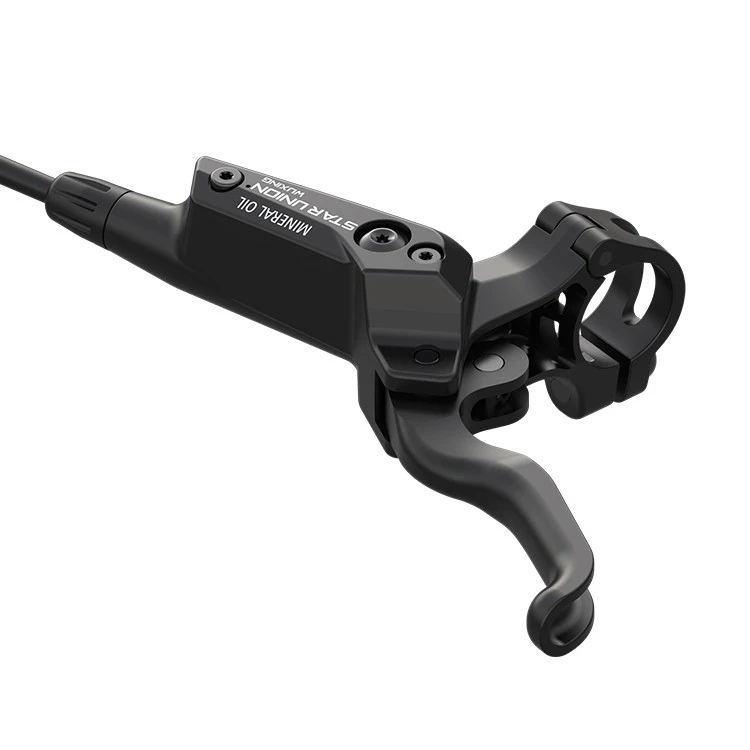

If you're in the market for high - quality hydraulic disc brakes for your ebike, look no further. Our products are designed to meet the highest standards of performance and reliability. We invite you to contact us for more information and to discuss your specific requirements. Whether you're a small ebike manufacturer or a large distributor, we're here to provide you with the best solutions for your business.
References
- Journal of Automotive Engineering, "The Effect of Brake Pad Bedding on Stopping Distance and Wear", Vol. XX, Issue XX, 20XX.
- Brake Manufacturer's Handbook, "Best Practices for Hydraulic Disc Brake Break - In", 20XX.